Can NRIs Buy Property in Chennai? Rules Explained

Yes, Non-Resident Indians (NRIs) and Overseas Citizens of India (OCIs) can easily buy houses, flats, and commercial properties in Chennai. Under the Foreign Exchange Management Act (FEMA) and Reserve Bank of India (RBI) rules, you do not need any special permission from the government or banks to invest in real estate in India. NRIs enjoy almost the same legal rights as resident Indians when buying a home. However, there is one key restriction: NRIs cannot directly buy agricultural land, farmhouses, or plantation land.
Chennai has become a top choice for real estate investment because of its growing metro network, fast-expanding IT hubs, and steady property prices. Whether you want to buy a cozy flat for your parents, earn monthly rental income, or secure a home for your future return to India, understanding the basic legal rules and payment methods will help you make a safe decision.
What Types of Property Can NRIs Buy in Chennai?
The RBI permits NRIs to buy both residential and commercial spaces without any upper limit on the number of properties they can own.
| Property Type | Allowed or Not? | Important Rule to Know |
|---|---|---|
| Residential Apartments & Villas | Allowed | You can buy as many units as you like. |
| Commercial Offices & Shops | Allowed | Open for rental income or setting up a business. |
| Residential Plots / Land | Allowed | Must be an approved plot meant for housing. |
| Agricultural Land & Farmhouses | Not Allowed | Buying is banned. You can only get it if someone gifts or leaves it to you in a will. |
Approved Payment Methods for NRI Buyers
According to FEMA guidelines, all payments for property deals in India must go strictly through normal bank channels in Indian Rupees (INR). Using cash or foreign currency directly to buy property is completely illegal in India.
You can use any of these safe banking paths:
- NRE (Non-Resident External) Account: Money sent from your foreign account is deposited here in rupees. You can easily transfer this money back abroad whenever you want.
- NRO (Non-Resident Ordinary) Account: Used to handle income earned inside India, like local house rent or dividends. This money can also be used to buy real estate.
- Direct Bank Transfer (SWIFT): You can transfer funds directly from your foreign bank account to the builder's official bank account in India.
- NRI Home Loans: Major Indian banks offer home loans to NRIs for up to 80% of the property cost. You can pay the monthly EMIs using your NRE or NRO accounts.
Simple Document List for Property Registration
To register your property under the Tamil Nadu government and stay aligned with RERA rules, keep these essential papers ready:
- A valid Indian Passport or OCI Card.
- Your PAN Card (this is mandatory for all high-value financial deals in India).
- Proof of address abroad (like a utility bill, driving license, or work permit).
- Passport-sized photos.
- NRE/NRO bank statement showing clear proof of funds.
- Power of Attorney (PoA) document (if someone else is registering the house on your behalf in Chennai).
How to Buy Property Remotely Using Power of Attorney (PoA)
If you live abroad and cannot travel to Chennai for the paperwork, you can authorize a trusted family member or close friend to sign the documents for you using a Power of Attorney (PoA).
- Draft the Document: Write down the clear power you are giving your representative (like signing the purchase agreement at the Sub-Registrar Office).
- Attest at the Indian Embassy: Visit the nearest Indian Embassy or Consulate in your country of residence, sign the PoA in front of the officer, and get it stamped.
- Send and Register in Chennai: Courier the original paper to your representative in Chennai. They must take it to the local District Registrar Office within 3 months to register it officially.
Basic Tax Rules Every NRI Buyer Should Know
1. TDS (Tax Deducted at Source)
When buying a house priced over ₹50 Lakhs from an Indian resident seller, you must deduct 1% TDS from the total amount and pay it to the tax department.
2. Income Tax on House Rent
If you rent out your flat in Chennai, that rental income is taxable under Indian law. The good news is that the government gives you a flat 30% deduction on the rent to cover maintenance and repair costs, which lowers your total tax.
3. Selling Property and Sending Money Back
If you sell the house after holding it for more than 2 years, it counts as a long-term investment and is taxed at a 20% rate. Under RBI guidelines, you can safely send up to USD 1 Million back to your foreign bank account per financial year after paying your local taxes.
Top Real Estate Locations in Chennai for NRIs
South Chennai continues to be the preferred choice for NRI investors due to its proximity to technology hubs and steady development.
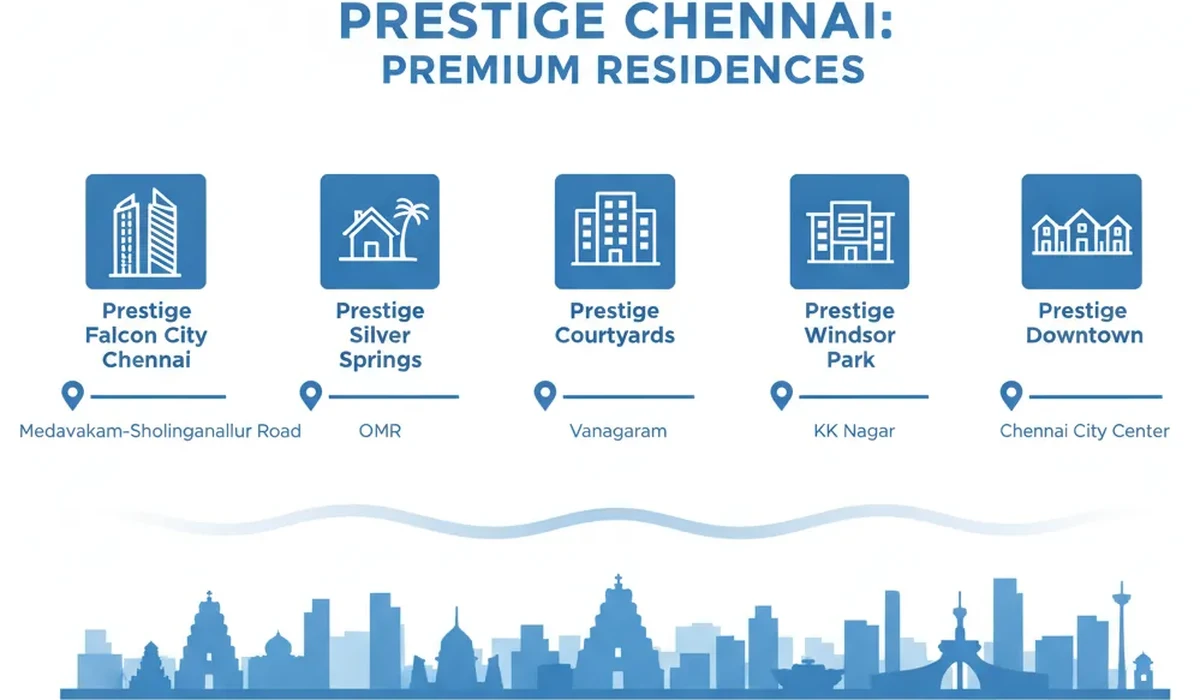
- Medavakkam – Sholinganallur Road: A fast-growing corridor right next to major IT hubs and the OMR technology belt. Large luxury developments like Prestige Falcon City Chennai on Medavakkam-Sholinganallur Road offer world-class living with gated security, low-density open spaces, and modern lifestyle amenities.
- Old Mahabalipuram Road (OMR): Chennai's famous IT corridor, known for yielding consistent rental returns from working professionals.
- GST Road: Popular for its quick, direct access to the Chennai International Airport and industrial manufacturing hubs.
Frequently Asked Questions
1. Can an NRI buy a home in Chennai without visiting India?
Yes. You can appoint a trusted family member or relative in Chennai through an Embassy-attested Power of Attorney (PoA) to complete all paper registration work for you.
2. Is a PAN card mandatory for an NRI to buy property in Chennai?
Yes, a PAN card is completely mandatory for buying property, paying property taxes, and processing financial payments in India.
3. Can an NRI buy agricultural land or a farmhouse in Chennai?
No. Foreign exchange laws prohibit NRIs from directly buying farmland, agricultural plots, or farmhouses. You can only acquire them if inherited from a resident Indian.
4. Can an NRI get a home loan from an Indian bank?
Yes. Major Indian banks easily provide home loans to NRIs based on their abroad salary, job stability, and credit score.
5. Can I transfer rental income earned in Chennai back to my foreign account?
Yes. You can credit the rent into your NRO bank account, pay applicable income taxes in India, and then easily transfer the money abroad.
6. Do OCI cardholders follow the same property rules as NRIs?
Yes. Overseas Citizens of India (OCI cardholders) enjoy the exact same real estate purchase rights and privileges as NRIs.
7. How much money can an NRI send back abroad after selling a property?
You can transfer up to USD 1 Million every financial year from the sale proceeds of your property through your NRO bank account.
Related Posts

Investment

Advantages of Investing in Prestige Falcon City Chennai

Advantages Of Investing in Prestige Group Projects

Advantages of Investing in Prestige Pre Launch Projects

Benefits of Buying Property on Medavakkam-Sholinganallur Road

Best Investment Property in Chennai 2026

Is It Worth Investing in Medavakkam Chennai?
Is Prestige Falcon City Chennai a Good Investment?

Prestige Falcon City Chennai Rent

Prestige Falcon City Chennai Resale

Top Reasons to Invest in Medavakkam Chennai

Which Area is Best for Investment in Chennai?

Why Medavakkam is the Best Place to Invest