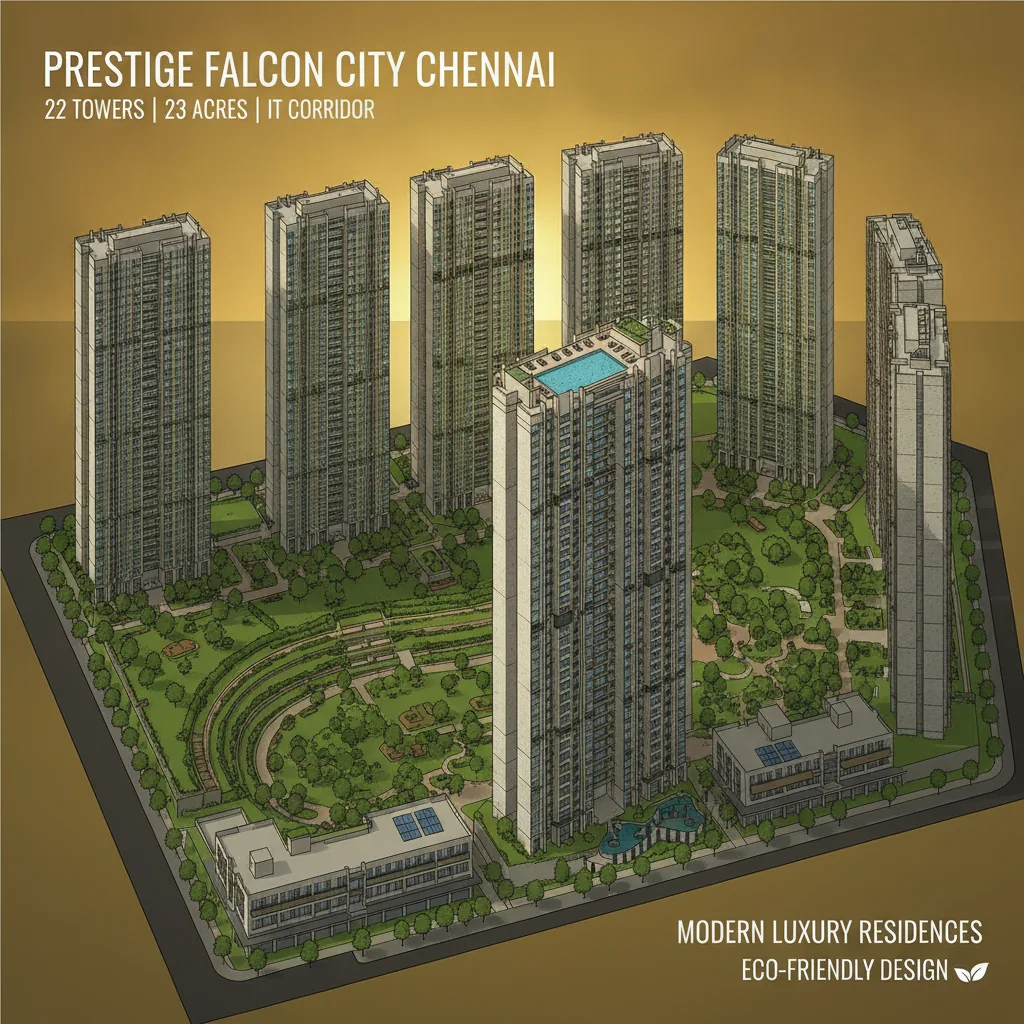
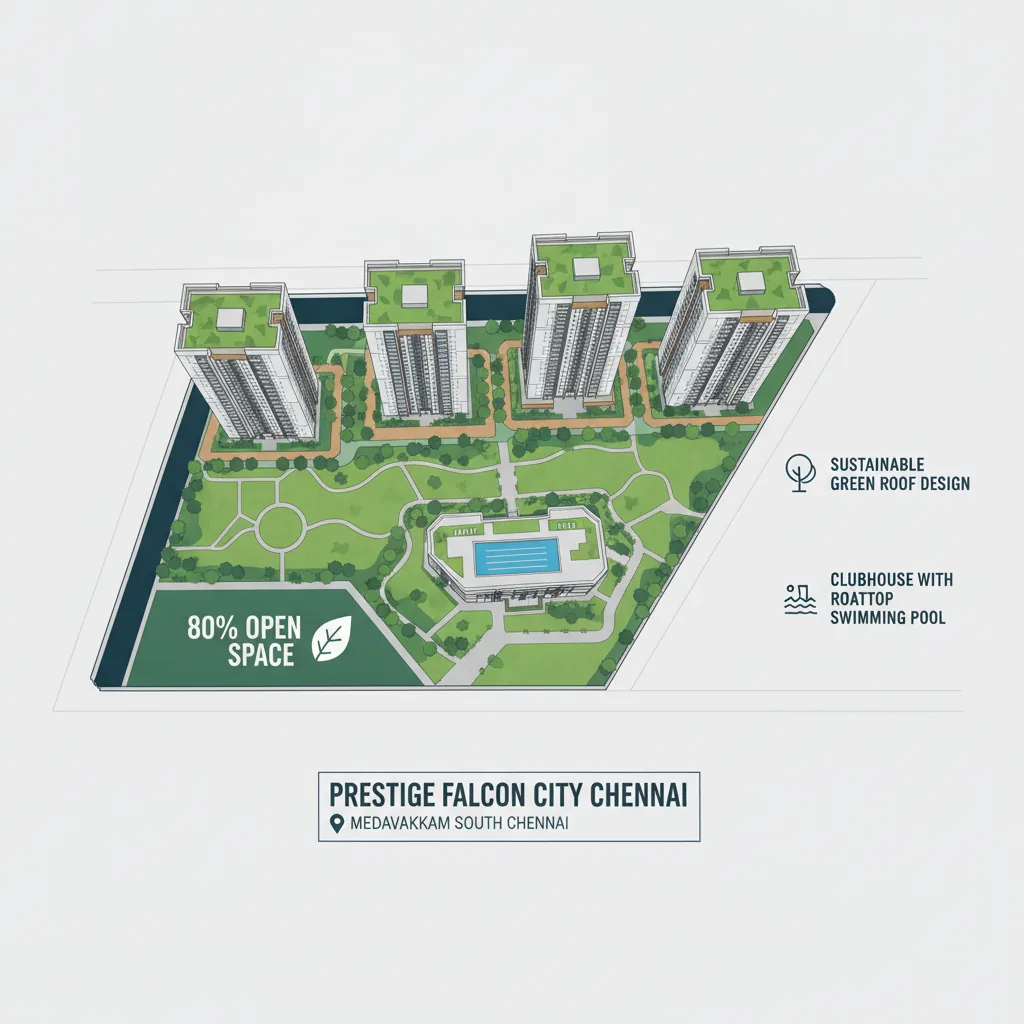
Documents Required to Buy Property in Prestige Falcon City Chennai
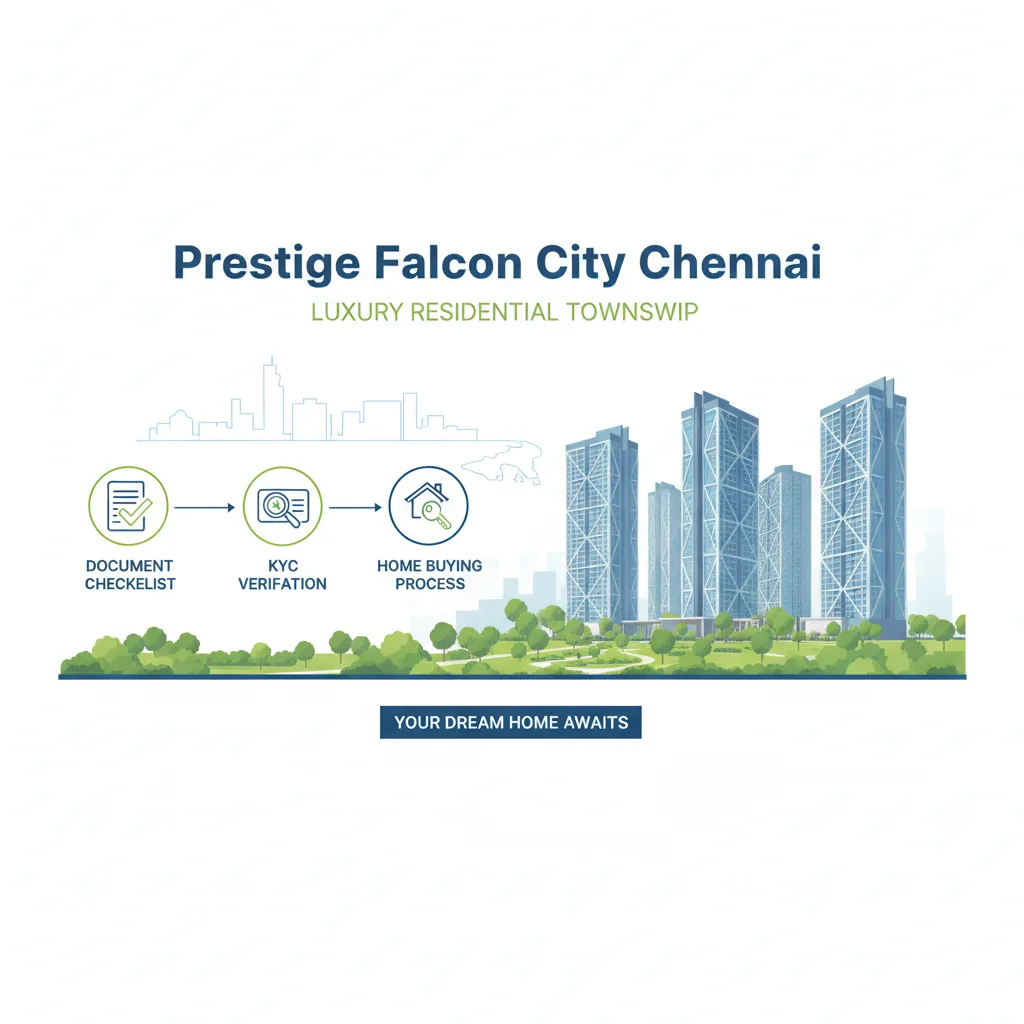
Documents Required to Buy Property in Prestige Falcon City Chennai comprise essential identity proofs, builder agreements, statutory approvals, revenue records, and bank loan clearance certificates that ensure a smooth, transparent, and legally binding transaction. Located along the fast-growing Medavakkam–Sholinganallur Road in South Chennai, Prestige Falcon City Chennai is a high-profile township development. Buying an apartment in a large-scale project requires verifying both individual buyer credentials and project-level legal clearances.
We have broken down every critical document you need at each stage of your homebuying journey—from initial booking to final registration and handover.
1. Personal Identification & KYC Documents
Before signing any agreement or paying an advance, every buyer must submit verified Know Your Customer (KYC) documentation. These documents confirm your identity, tax status, and official address for registration and home loan processing.
- PAN Card (Permanent Account Number): Mandatory for all real estate transactions exceeding ₹50,000 in India and required for Tax Deducted at Source (TDS) under Section 194-IA.
- Aadhaar Card: Serves as official proof of identity and address during online biometrics at the Sub-Registrar Office (SRO) during deed registration.
- Passport-Sized Photographs: Required for booking forms, sale agreements, and registration deeds.
- Proof of Address: Passport, Voter ID, or recent utility bills (if the address differs from your Aadhaar details).
- For NRI Buyers: Passport copy, valid Visa/OCI card, Power of Attorney (PoA) registered locally if executing through a representative, and NRE/NRO account statements.
2. Initial Booking & Financial Allocation Records
Once you select your preferred 2, 3, or 4 BHK floor plan at Prestige Falcon City Chennai, the developer issues a set of preliminary booking documents.
- Expression of Interest (EOI) / Booking Form: The formal application form details your personal profile, unit selection, and terms of purchase.
- Booking Amount Payment Receipt: Official proof of the token advance paid to the developer.
- Allotment Letter: Issued by Prestige Group on company letterhead, confirming the specific tower number, floor level, apartment number, carpet area, and allotment date.
- Cost Sheet & Payment Schedule: A clear financial breakdown listing the base property price, floor rise charges, preferred location charges (PLC), GST, car parking fees, and construction-linked milestone payment dates.
3. Mandatory Builder Contracts & Sale Deeds
In Tamil Nadu, purchasing an under-construction apartment involves signing legal contracts that establish ownership rights and financial obligations.
Key Rule under TNRERA: Developers cannot collect more than 10% of the total property cost without executing and registering a formal Sale Agreement with the homebuyer.
A. Agreement for Sale / Construction Agreement
This document outlines the detailed specifications of the project, total cost, construction timeline, payment milestones, possession deadlines, and penalty clauses for delays. It legally binds the developer to deliver the home as per promised plans.
B. Sale Deed for Undivided Share of Land (UDS)
In multi-story residential developments, you own a specific portion of the land on which the building stands. The Sale Deed for UDS transfers ownership of this land fraction from the developer to you, registered at the local Sub-Registrar Office.
C. Final Sale Deed / Title Deed
The primary legal instrument that conveys absolute ownership of the completed apartment to the buyer. It is executed on stamp paper and registered under the Registration Act.
4. Statutory Approvals & Property Verification Documents
To ensure that the land and structure are completely legal, verified, and free from encumbrances, review these statutory compliance documents.
- TNRERA Registration Certificate: The mandatory registration document issued by the Tamil Nadu Real Estate Regulatory Authority. It guarantees that the project follows state guidelines, carpet area mandates, and scheduled delivery times.
- CMDA / Local Planning Approval: Sanctioned planning permission and approved layout plans from the Chennai Metropolitan Development Authority (CMDA) or local planning body, verifying road access and floor space index (FSI) compliance.
- Encumbrance Certificate (EC - Form 15): Issued by the Sub-Registrar Office, an EC tracks registered transactions for the past 13 to 30 years to confirm that the property is free from legal disputes, mortgages, or liens.
- Parent Documents (Mother Deed): Historical title deeds showing continuous, legal ownership of the land for at least 30 years prior to development.
- No Objection Certificates (NOCs): Statutory safety clearances from key departments, including the Fire & Rescue Services, Pollution Control Board, Airport Authority of India (height clearance), and Environmental Clearance Board.
5. Home Loan Verification Documents (If Banking Financed)
If you finance your apartment via a home loan, leading public and private banks require a set of pre-approved project papers alongside your income proof.
| Document Category | Key Papers Required | Purpose |
|---|---|---|
| Project Financial Approvals | Bank APF (Approved Project Financial) Number | Faster loan processing as the bank has pre-screened property titles. |
| Developer Clearances | Builder NOC & Tripartite Agreement | Confirms the builder has no objection to mortgaging the unit to the bank. |
| Applicant Income Proof | 6 months' salary slips, 2 years' Form 16, 6 months' bank statements | Verifies borrowing capacity and repayment capability. |
| Loan Execution Papers | Home Loan Sanction Letter & Demand Letters | Authorizes direct disbursement of funds to the builder as per construction milestones. |
6. Handover & Post-Possession Legal Documents
Upon construction completion, you must secure final handover clearances before moving in or renting out the flat.
- Completion Certificate (CC): Issued by local planning authorities after inspecting the building, confirming that it was constructed according to approved building plans.
- Occupancy Certificate (OC): Certifies that the building is structurally safe, complies with civic regulations, and is fit for human habitation with valid utility connections (water, power, drainage).
- No Dues Certificate: Issued by the builder upon full payment of all installments, maintenance deposits, and corpus fund contributions.
- Key Handover & Possession Letter: The official document giving physical possession of the unit to the buyer.
- Patta Transfer Application: Revenue record in Tamil Nadu proving land ownership; post-registration, the UDS Patta is updated in the homebuyer's name.
Quick Checklist: Documents at a Glance
| Document | Stage Needed | Issued By | Primary Role |
|---|---|---|---|
| PAN & Aadhaar | Booking / Loan | Government of India | Identity & Tax Compliance |
| Allotment Letter | Booking | Prestige Group | Reserves specific apartment unit |
| TNRERA Registration | Legal Verification | TNRERA State Board | Project legality & safety |
| Agreement for Sale | Advance Payment | Builder & Buyer | Construction & payment terms |
| Encumbrance Certificate | Due Diligence / Loan | Sub-Registrar Office | Proves title is clear of debts |
| Registered Sale Deed | Ownership Transfer | Sub-Registrar Office | Ultimate ownership document |
| Occupancy Certificate | Possession / Handover | CMDA / Local Body | Fitness for physical living |
Frequently Asked Questions (FAQs)
1. What are the most critical documents required to buy property in Prestige Falcon City Chennai?
The most critical documents include your PAN and Aadhaar cards, the Allotment Letter, Agreement for Sale, Registered Sale Deed (for UDS and apartment), TNRERA registration certificate, Encumbrance Certificate (EC), and Occupancy Certificate (OC).
2. Is Patta necessary for an apartment in South Chennai?
Yes. While the builder handles overall land records initially, an individual UDS Patta (or joint Patta transfer) in your name confirms your share of land ownership in the revenue records of Tamil Nadu.
3. Why is TNRERA registration mandatory before buying property in Chennai?
TNRERA registration ensures that the project is completely legal, protects buyers from construction delays, mandates escrow account usage for project funds, and locks in carpet area calculations by law.
4. How many years of Encumbrance Certificate (EC) should I check before buying?
You should obtain and verify an Encumbrance Certificate (EC) for a minimum of 13 to 30 years to verify that the property has an uninterrupted, clear title free from past mortgages or litigation.
5. Can I get a home loan for Prestige Falcon City Chennai without an original Sale Deed?
During construction, banks disburse home loan installments based on the registered Agreement for Sale, Allotment Letter, and Construction Agreement. The original registered Sale Deed is submitted to the bank once property registration is completed at the Sub-Registrar Office.
6. What is the difference between a Completion Certificate (CC) and an Occupancy Certificate (OC)?
A Completion Certificate (CC) proves that the builder constructed the high-rise according to the sanctioned plan, while an Occupancy Certificate (OC) certifies that the structure is safe and equipped with civic utilities for residents to live in.
7. What identity documents do NRI buyers need to purchase a flat in Chennai?
NRI buyers need a valid Indian Passport, PAN card, OCI/PIO card, overseas address proof, local bank statements (NRE/NRO), and a registered Power of Attorney (PoA) if they cannot be physically present during deed registration.